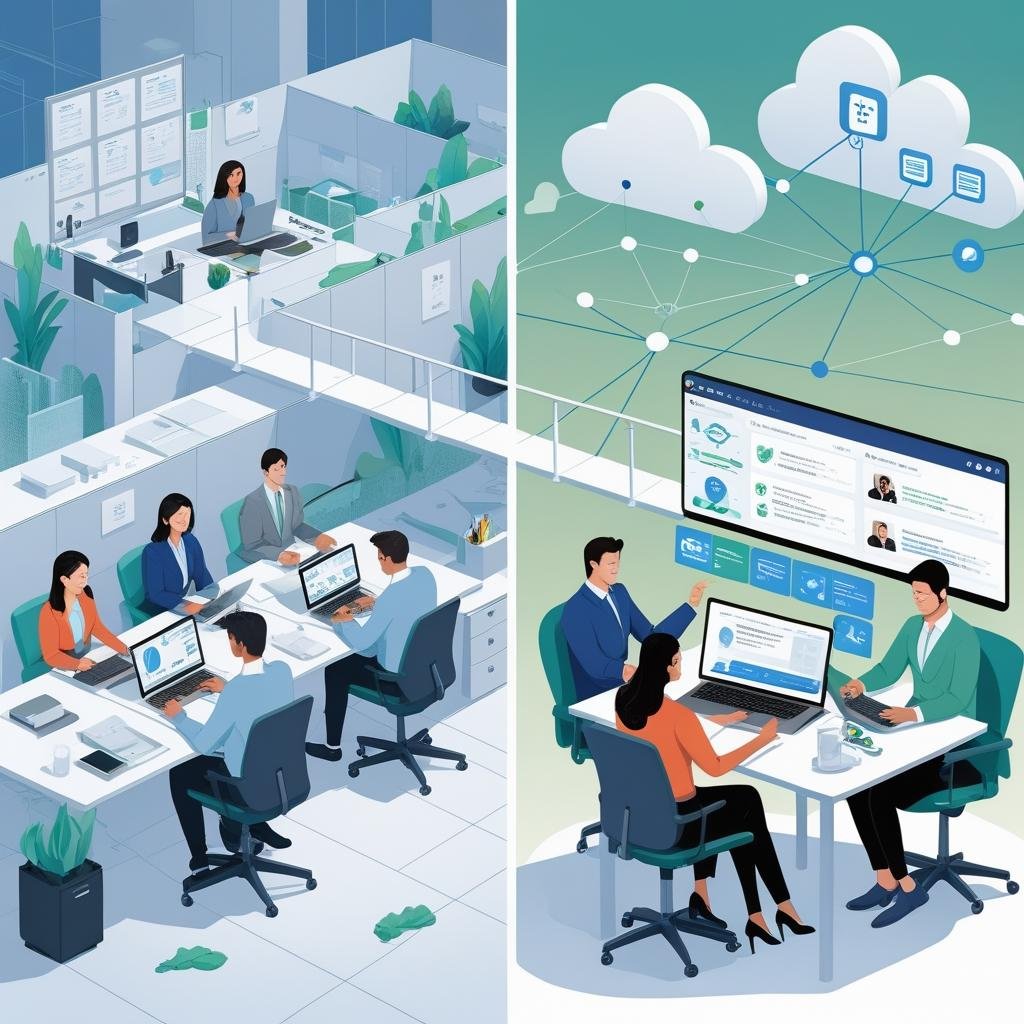
The Great (Workplace) Rebalancing
The future of work is here—but many organizations are still catching up. As companies move beyond crisis-mode adaptations into long-term hybrid and remote work strategies, the challenge isn’t just about issuing laptops and enabling Zoom calls. It’s about embedding these shifts into the organizational DNA—strategically, systemically, and sustainably.
What we’re witnessing isn’t just a technological transition; it’s a cultural, procedural, and structural transformation. And like any meaningful transformation, it needs intentional change management frameworks to ensure success.
In this article, we explore how organizations can integrate hybrid and remote work infrastructure into their change management models, ensuring operational continuity, employee engagement, and strategic alignment throughout.
Why Hybrid Work Demands Strategic Change Management
According to a 2024 Gartner survey, 82% of business leaders plan to allow remote or hybrid work post-pandemic, but only 35% have a change management strategy to support it. This gap creates a fragile foundation for a workforce expecting flexibility but experiencing confusion, inequity, or burnout.
Hybrid work touches every layer of the organization:
- People: shifting behaviors, trust-building, digital fatigue, collaboration dynamics
- Process: asynchronous workflows, virtual onboarding, performance measurement
- Platform: tool proliferation, security protocols, cloud-based operations
This is not a policy tweak. It’s a systemic evolution—and must be treated as such.
Where Traditional Change Frameworks Fall Short
Popular models like ADKAR, Kotter, or Lewin’s 3-Step offer structure, but few address the fluidity and ambiguity that hybrid work introduces. Employees may be geographically distant, culturally disconnected, or navigating unequal access to technology or leadership visibility.
What’s missing? A layer of digital empathy, infrastructure awareness, and remote engagement readiness.
Embedding Hybrid Work into Change Management Frameworks
Here are five key strategies to ensure hybrid/remote work adoption is embedded into your change approach—not bolted on as an afterthought.
1. Redefine the ‘Why’: Build a Hybrid Change Narrative
Before you roll out tools or policies, build an emotional and strategic case for change:
- Why hybrid work matters for your organization’s future
- How it aligns with culture, productivity, sustainability, or inclusion
- What success looks like for different stakeholders
Tip: Avoid a one-size-fits-all narrative. Craft different versions tailored for frontline managers, senior leaders, and cross-functional teams.
📌 Consultant Corner:
“Adoption rises when change stories feel personal. Use video messages from leaders, highlight stories of flexibility improving work-life balance, and co-create the vision with employees.”
2. Map Infrastructure to Human Experience
Hybrid work isn’t just about VPNs and video calls—it’s about how people experience collaboration, control, and connection:
- Audit how tools enable or inhibit productivity
- Align tech onboarding with behavioral nudges
- Build training into change plans, not as afterthoughts
For example, transitioning to Microsoft Teams without guiding managers on virtual meeting etiquette or documentation standards invites confusion, not agility.
3. Integrate Hybrid Readiness into Your Change Phases
Let’s explore how hybrid and remote work can be woven into classic change phases:
| Phase | Hybrid Change Action |
| Awareness (ADKAR) | Share insights from remote work pilots, surveys, and external benchmarks |
| Desire | Use change champions and early adopters to advocate benefits of hybrid success |
| Knowledge | Offer microlearning on hybrid tools, time management, virtual leadership |
| Ability | Hands-on mentoring and real-time support during transitions (e.g., virtual help desks) |
| Reinforcement | Build feedback loops into remote routines (pulse surveys, retrospectives) |
4. Bridge Culture with Digital Rituals
Culture doesn’t disappear in hybrid work—it gets fragmented. Leaders must intentionally design new rituals and rhythms that foster trust and unity:
- Virtual open-door sessions with leadership
- Hybrid-friendly onboarding buddies
- Recognition programs across time zones
- Remote watercooler spaces (Slack, Gather, or Discord)
Remember: Employees adopt what they emotionally invest in. If the digital culture feels cold, no tool or policy can fix that.
5. Measure Change Through a Hybrid Lens
Avoid generic adoption metrics. Instead, use hybrid-specific KPIs:
- % of employees reporting digital fatigue
- Manager comfort level in leading hybrid teams
- Equity in visibility between remote and in-office workers
- Speed of access to remote support/resources
Build these metrics into change dashboards reviewed in retrospectives or steering committee meetings.
Common Pitfalls to Avoid
- Assuming tools = adoption: Training and habits matter more than licenses
- Leaving middle managers out: They are your change linchpins in hybrid contexts
- Underinvesting in communication: Remote workers need more clarity, not less
- Ignoring equity issues: Ensure remote employees aren’t seen as “less visible” or “less productive”
Consultant Corner: Quick Wins for Hybrid Change Transitions
✅ Launch a “Digital Readiness Scorecard” to assess team preparedness
✅ Create remote-friendly communication norms (e.g., async updates, clear tagging in chats)
✅ Pilot a 90-day “Flex Sprint” with a small team before scaling hybrid changes
✅ Build manager toolkits for leading blended teams
✅ Include remote work rituals in your change playbook
Case Snapshot: From Office-Centric to Flex-First
Company: A mid-sized marketing agency in Singapore
Challenge: High attrition after return-to-office mandates, tool fatigue, fragmented communication
Change Strategy:
- Reframed hybrid as a talent retention and inclusion strategy
- Integrated hybrid touchpoints into ADKAR: e.g., “ability” stage included async work simulations
- Created hybrid onboarding kits and hosted virtual town halls for continuous engagement
- Final Result: 23% increase in retention in 6 months and 40% higher employee satisfaction on workplace flexibility
Final Reflection: Change Is No Longer Location-Agnostic
We’re beyond the days when “change” meant switching office buildings or upgrading CRM systems. Today’s transformation is borderless, real-time, and deeply personal.
Hybrid and remote work models are not just logistical challenges—they’re strategic change levers. Leaders who embed digital flexibility into their change frameworks won’t just survive disruption—they’ll attract talent, drive innovation, and lead with relevance.
🎯 Strategic Takeaway:
Change isn’t where we work—it’s how we adapt. Build change strategies as fluid and resilient as the world we now work in.