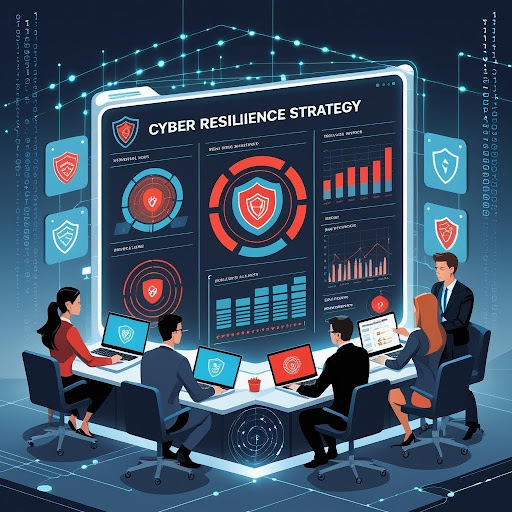
The Hidden Threat in Every Project
In today’s digitally driven world, cyber threats aren’t just IT issues—they’re strategic business risks. Project managers, often focused on budgets, timelines, and deliverables, may overlook a silent disruptor lurking in the background: cyber vulnerabilities.
From ransomware attacks that paralyze operations to data breaches that derail stakeholder trust, cyber threats can undermine even the most well-executed projects. As threat actors grow more sophisticated, project management needs a new layer of defense—cyber resilience.
Why Cyber Resilience Must Be Part of Every Project Strategy
Traditional project risk frameworks primarily address cost, schedule, scope, and stakeholder issues. But in an era where supply chains are digitized, team communications are cloud-based, and critical data flows across third-party tools, cyber risks must be treated with the same urgency as financial and operational risks.
Cyber resilience goes beyond prevention. It’s the ability to anticipate, withstand, recover from, and adapt to cyberattacks and disruptions. It’s not about building an impenetrable system—but a recoverable, responsive one.
The Expanding Cyber Threat Landscape
According to IBM’s 2024 Cost of a Data Breach Report, the average breach cost reached $4.45 million, with 82% of breaches involving data stored in the cloud. In parallel, project management has shifted to cloud-based platforms like Jira, Trello, MS Project, and Slack—making project ecosystems a rich target for threat actors.
Some of the evolving risks include:
- Phishing attacks on project stakeholders
- Ransomware disrupting delivery timelines
- Data exfiltration from collaboration tools
- Third-party vendor vulnerabilities
- Insider threats due to poor access controls
Projects involving sensitive data (e.g., healthcare, fintech, infrastructure) are especially vulnerable—and the cost of failure can ripple far beyond the project boundary.
5 Key Cyber Resilience Strategies for Project Managers
So, how do you embed cyber resilience into project management without turning every PM into a cybersecurity expert? The answer lies in strategic integration, not siloed responsibility.
Here are five actionable strategies:
1. Embed Threat Modeling in the Planning Phase
Before execution begins, assess potential cyber threats that could impact project assets—data, tools, platforms, or personnel. Map out:
- Critical touchpoints (APIs, SaaS platforms)
- Potential attack vectors
- Impact assessment (cost, reputational damage, operational downtime)
Tools like STRIDE or the MITRE ATT&CK framework can help identify risks early. Consider integrating these into project risk registers and stakeholder briefing documents.
2. Apply the “Secure-by-Design” Mindset
Incorporate cybersecurity requirements as non-functional requirements (NFRs) in project scoping documents. These should include:
- Access controls and authentication protocols
- Data encryption standards
- Compliance mandates (e.g., GDPR, HIPAA, DORA)
For example, if you’re building a new customer portal, security requirements should sit alongside performance and usability specs from day one—not as an afterthought.
3. Train and Engage All Stakeholders
The biggest cyber gap isn’t technology—it’s people. According to a World Economic Forum study, 95% of cybersecurity breaches are caused by human error.
Build awareness through:
- Brief cyber hygiene sessions for team members
- Simulated phishing tests
- Checklists for secure document sharing
- Clear protocols on handling suspicious activity
Make cybersecurity part of your project culture, not just IT’s responsibility.
4. Set Up Real-Time Monitoring and Response
Use monitoring tools to track digital activities across project platforms. Ensure alerts are configured to flag unusual behavior such as:
- Unauthorized logins
- Data movement to external devices
- Sudden changes in access privileges
Establish a simple incident response plan:
- Who is the first point of contact?
- What are the containment protocols?
- How will communication be managed?
Even a 5-minute containment delay can magnify the damage.
5. Build Resilience into Project Closure and Handover
Resilience doesn’t end with project delivery. In your handover process, include:
- Cyber audit trails
- Updated documentation of security protocols
- Risk logs and incident records
- Lessons learned from past security lapses (if any)
Ensure that operational teams taking over the project understand its cyber dependencies.
Cyber Resilience Across the Project Lifecycle
Here’s how cyber resilience maps across standard project phases:
| Phase | Cyber Resilience Actions |
| Initiation | Include cyber risks in business case and stakeholder briefings |
| Planning | Threat modeling, secure design, vendor assessments |
| Execution | Role-based access, regular security check-ins, phishing simulations |
| Monitoring | Real-time threat detection, metrics dashboards |
| Closure | Cyber documentation, incident history, security training for handover teams |
Aligning with Standards and Frameworks
To standardize your approach, align with globally accepted frameworks:
- NIST Cybersecurity Framework – Define, Protect, Detect, Respond, Recover
- ISO/IEC 27001 – For organizations pursuing information security maturity
- PMBOK® Guide – Integrate with risk and stakeholder management knowledge areas
- Zero Trust Model – Especially useful for remote/distributed teams
These frameworks don’t replace your PM methodology—they enhance it with a cyber lens.
Consultant Corner: Quick Wins for Busy PMs
- Add a “Cyber Risk” column in your RAID log
- Introduce a 10-minute “Security Stand-up” during sprint planning
- Mandate MFA on all project collaboration tools
- Tag cybersecurity SMEs in sprint reviews for visibility
- Document all third-party tools and data flows used in the project
From Project Delivery to Project Defense
Projects are increasingly digital by nature—and that means they are exposed by default. Project managers cannot afford to treat cyber resilience as “IT’s problem.” Just as we’ve learned to manage stakeholder conflicts or vendor delays, cyber risks must be proactively planned, managed, and mitigated.
Resilience is no longer a luxury—it’s a necessity.
Case in Point: A Tale of Two Cloud Projects
Scenario A: A fintech startup launched a new loan disbursal platform using multiple third-party APIs. The team skipped thorough vendor assessments and had no incident response plan. Within two months, an API vulnerability exposed user data—delaying launch and drawing regulatory scrutiny.
Scenario B: A healthcare nonprofit rolled out a digital records system. The PMO included cyber controls in their RACI matrix, required vendor SOC 2 reports, and ran a red-team test before go-live. Despite a minor phishing attempt, the system continued uninterrupted due to robust detection and recovery protocols.
Lesson: The difference wasn’t technology. It was resilience thinking at the project level.
Final Reflection
Whether you’re managing a SaaS rollout, infrastructure upgrade, or cloud migration, resilience isn’t just about recovery—it’s about readiness. By embedding smart defense into your project DNA, you’re not just protecting timelines or budgets—you’re protecting trust.