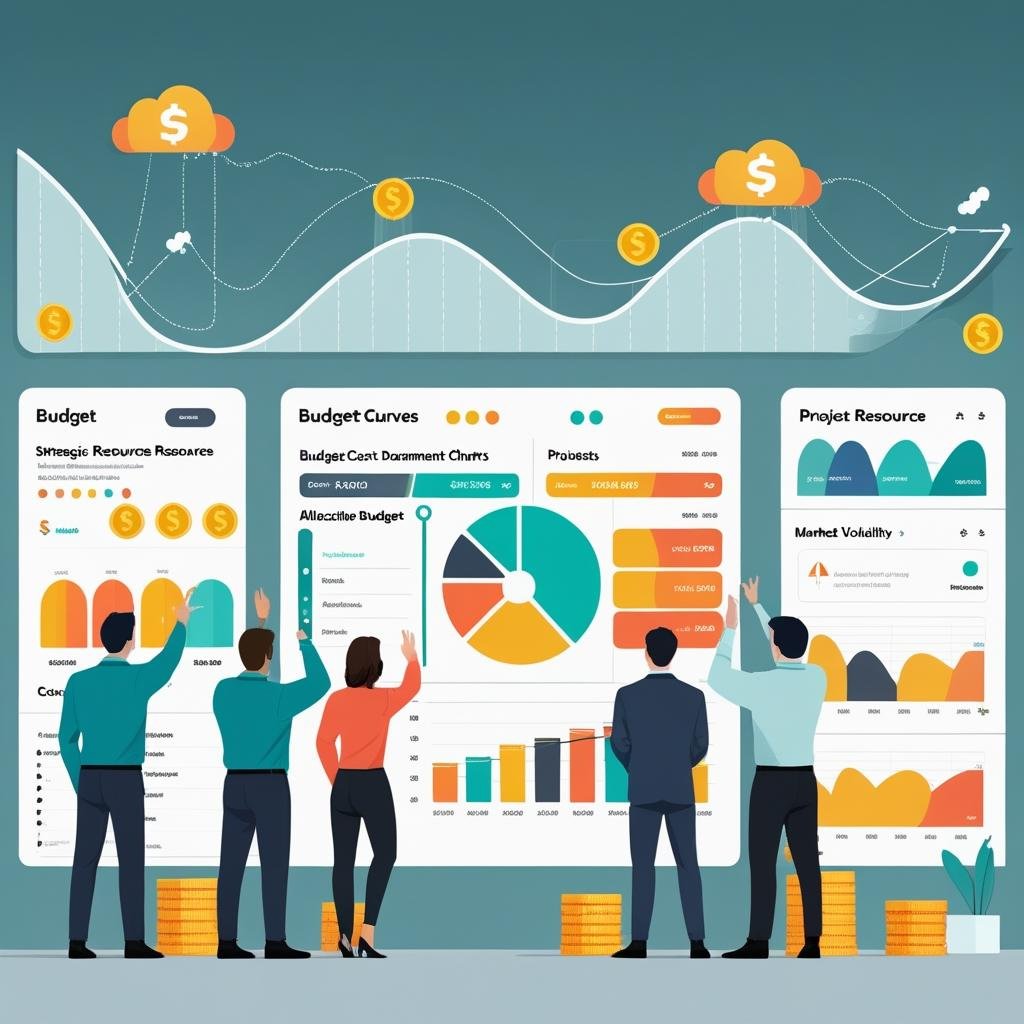
n today’s fast-changing economic landscape, project managers and business leaders face unprecedented challenges. Economic uncertainty—from inflation spikes and geopolitical tensions to supply chain disruptions—has created a complex environment where managing resources and forecasting budgets demand agility, precision, and foresight. Effective optimization of resource allocation and budget forecasting can mean the difference between project success and costly overruns.
This article explores how professionals can navigate these challenges with actionable strategies, tools, and frameworks designed to foster resilience and adaptability in project management.
Understanding Economic Uncertainty and Its Impact on Projects
Economic uncertainty refers to the unpredictable fluctuations and risks in economic conditions that affect business operations and financial planning. Events like sudden market downturns, inflation, currency volatility, and regulatory changes create ripple effects impacting resource availability, labor costs, and overall project expenses.
For project managers, this uncertainty translates into several core challenges:
- Volatile costs: Prices for materials, labor, and services may change rapidly, complicating budget accuracy. For example, during recent supply chain disruptions, prices of raw materials such as steel and lumber surged unpredictably, making static budgets obsolete.
- Resource scarcity: Supply chain disruptions or workforce shortages can reduce availability of critical materials or skilled personnel, leading to project delays and increased costs.
- Shifting priorities: Stakeholders may reprioritize projects or adjust scopes due to financial constraints, economic downturns, or emerging business needs.
- Forecasting difficulties: Traditional static budget models often fail to account for rapid economic changes, leading to frequent overruns or misallocated resources.
Recognizing these impacts is the first step toward developing adaptive strategies that can optimize resource utilization and maintain financial control.
Key Principles for Optimizing Resource Allocation
Resource allocation is about assigning the right people, materials, and equipment to the right tasks at the right time. In uncertain times, this requires flexibility and prioritization:
1. Embrace Flexible Resource Pools
Instead of fixed assignments, maintain resource pools with cross-trained personnel who can shift between projects as priorities evolve. For instance, a marketing analyst might support multiple campaigns or step into data analytics roles, depending on project needs.
This flexibility helps avoid bottlenecks when certain skills or resources become scarce. It also builds organizational resilience by reducing dependency on specific individuals.
2. Prioritize Critical Activities
Use prioritization frameworks like MoSCoW (Must have, Should have, Could have, Won’t have) or ICE scoring (Impact, Confidence, Ease) to focus resources on high-impact tasks. Prioritizing helps ensure limited resources are invested where they generate the most value.
For example, during a software development project, core functionality might be prioritized over less critical features, ensuring the product launch is timely despite resource constraints.
3. Implement Rolling Resource Reviews
Resource allocation is not a “set and forget” exercise. Regularly review assignments—weekly or monthly—so you can respond to shifting project demands, resource availability, or external factors.
Rolling reviews allow project managers to reallocate personnel or equipment promptly, minimizing downtime and improving utilization.
4. Leverage Agile and Hybrid Methodologies
Agile project management, with its iterative cycles and frequent reprioritization, naturally accommodates uncertainty. Hybrid methodologies combine Agile’s flexibility with traditional project management’s structure, allowing teams to adapt plans without losing strategic oversight.
Adopting such methodologies empowers teams to respond quickly to changes in scope, resource availability, or external market conditions.
Advanced Budget Forecasting Techniques
Budget forecasting amid uncertainty requires dynamic models and risk-aware planning. Static annual budgets often fail in volatile economies, so project managers must employ advanced techniques to maintain financial control.
1. Scenario Planning
Scenario planning involves creating multiple budget scenarios—best case, worst case, and most likely—to prepare for different economic outcomes. This technique enables contingency planning and informed decision-making.
For instance, a construction firm might model how rising fuel costs or labor shortages impact budgets differently, preparing mitigation plans for each scenario.
2. Sensitivity Analysis
This process tests how changes in key assumptions—like material costs, labor rates, or currency fluctuations—affect the overall budget. Identifying highly sensitive inputs helps prioritize monitoring and risk mitigation efforts.
If steel prices have a large impact on project cost, teams can focus supplier negotiations or alternative sourcing strategies accordingly.
3. Contingency Reserves and Buffers
Rather than applying a flat contingency percentage across the budget, base reserves on specific risk assessments. This targeted approach ensures funds are available for known uncertainties while avoiding excessive padding that ties up capital.
For example, projects with volatile foreign exchange exposure may allocate higher contingency for imported equipment costs.
4. Use Predictive Analytics and AI Tools
Modern forecasting tools powered by artificial intelligence and machine learning can analyze large datasets—including historical project data, market trends, and economic indicators—to provide more accurate and timely budget forecasts.
These tools can alert managers to emerging risks, automate scenario analyses, and continuously update forecasts as conditions change.
5. Rolling Forecasts
Replace static annual budgets with rolling forecasts updated regularly (monthly or quarterly). This approach keeps projections aligned with current realities and allows course corrections throughout the project lifecycle.
Rolling forecasts increase financial agility, helping projects avoid surprise overruns.
Overcoming Common Challenges
Supply Chain Disruptions
The COVID-19 pandemic exposed the fragility of global supply chains. To mitigate this risk:
- Diversify suppliers geographically.
- Negotiate flexible contracts with price adjustment clauses.
- Maintain safety stocks of critical materials.
- Use supply chain monitoring tools to anticipate delays.
Labor Availability and Cost Fluctuations
Workforce shortages and wage inflation pose ongoing risks. Address these by:
- Investing in workforce planning and cross-training.
- Utilizing temporary staffing or outsourcing to fill gaps.
- Building strong relationships with labor unions and agencies.
- Offering competitive compensation to retain talent.
Changing Stakeholder Expectations
Economic uncertainty can shift stakeholder priorities quickly. Maintain trust and alignment through:
- Transparent, regular communication on budget and resource impacts.
- Engaging stakeholders early in reprioritization decisions.
- Demonstrating proactive risk management and contingency plans.
Data Limitations
Accurate forecasting depends on quality data. Enhance data capabilities by:
- Integrating project management, financial, procurement, and HR systems.
- Automating data collection and reporting.
- Training teams in data analysis and interpretation.
Best Practices and Recommendations
- Regularly reassess resource allocation and budget assumptions in light of new economic data and project developments. Economic conditions can shift quickly—staying updated is critical.
- Foster cross-functional collaboration between finance, procurement, HR, and project teams for holistic planning and risk management.
- Invest in training project teams on agile methodologies, risk management, and data literacy to improve responsiveness.
- Leverage technology such as AI-powered analytics and integrated management platforms to improve forecasting accuracy and decision-making speed.
- Build strong supplier and partner relationships with flexible contract terms that can adapt to market changes.
- Maintain transparent communication with stakeholders to manage expectations and ensure alignment on priorities and risks.
Case Study: Navigating Resource and Budget Challenges in a Global Infrastructure Project
A multinational infrastructure company faced significant budget overruns due to rapid inflation and supply chain issues during a large highway construction project spanning multiple countries.
Challenges:
- Material costs rose 15% in six months due to global steel shortages.
- Skilled labor shortages delayed critical paving and structural work.
- Currency fluctuations affected overseas equipment lease payments.
Actions Taken:
- Adopted rolling budget forecasts updated monthly with real-time market data.
- Developed multiple budget scenarios with local market experts to anticipate risks.
- Reallocated cross-trained crews dynamically to maintain progress on critical path tasks.
- Negotiated contingency clauses with suppliers and equipment providers for price adjustments.
- Implemented AI-driven forecasting tools for continuous risk monitoring.
Results:
- The project minimized budget overruns to under 5%, significantly outperforming industry averages.
- Improved stakeholder communication maintained confidence and secured additional funding when needed.
- The flexible resource model boosted workforce productivity by 10% and reduced downtime.
This case underscores the power of adaptive resource and budget management in uncertain environments and highlights the value of technology, collaboration, and agility.
Conclusion
Economic uncertainty is unlikely to disappear soon, making it essential for project managers and business leaders to evolve their approaches to resource allocation and budget forecasting. The traditional methods, reliant on static assumptions and fixed plans, no longer suffice in today’s volatile global economy.
By embracing flexibility, employing advanced forecasting techniques, leveraging technology, and fostering continuous collaboration, organizations can not only survive but thrive amid volatility. Adaptive planning and risk-informed decision-making will become core competencies that distinguish successful projects and companies.
As you evaluate your own projects, consider how you can integrate these principles to optimize your resource management and budgeting strategies. What tools or approaches have you found effective in uncertain economic conditions? Share your insights and experiences in the comments.