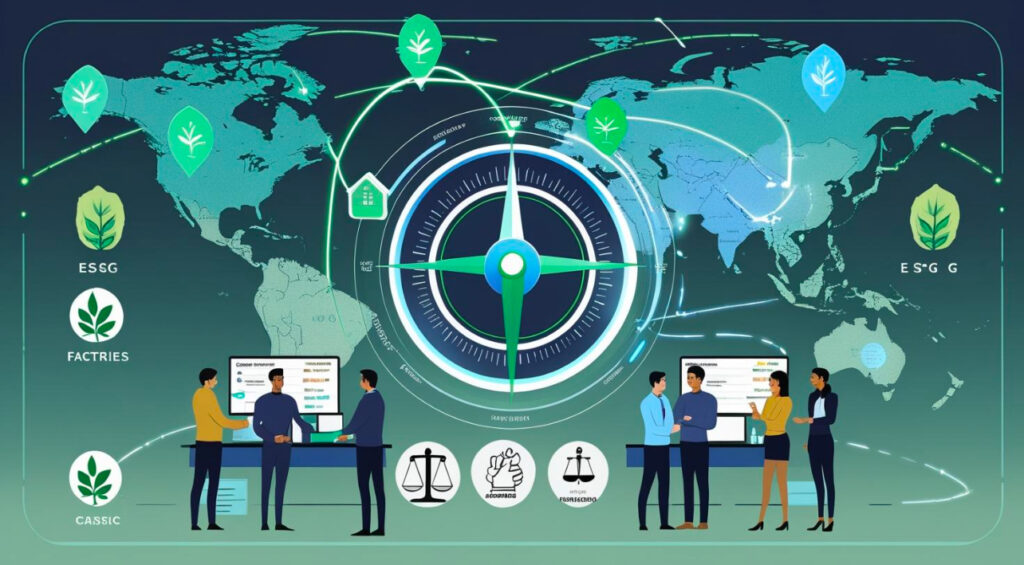
ESG in Project Management: A Global Imperative
Environmental, Social, and Governance (ESG) factors are no longer fringe concerns. They are central pillars shaping how organizations plan, execute, and measure the success of their projects—especially those spanning international boundaries. As global scrutiny intensifies around sustainability, labor practices, and corporate accountability, project managers are under growing pressure to integrate ESG principles into every phase of project delivery.
Whether building a renewable energy facility in Southeast Asia, implementing a tech upgrade in Europe, or launching a community program in Africa—ESG compliance is a make-or-break factor in successful project deployment.
Why ESG Compliance Now Matters More Than Ever
Several converging forces are accelerating the demand for ESG integration in project management:
- Regulatory tightening: Governments and institutions worldwide are enacting stricter ESG mandates (e.g., EU’s CSRD, India’s BRSR, U.S. SEC climate rules).
- Investor pressure: ESG-driven investing accounts for nearly $35 trillion globally, influencing which projects get funded.
- Reputational risk: Failures in environmental safety, labor rights, or governance can trigger public backlash and erode brand value.
- Alignment with SDGs: ESG strategies align directly with the UN Sustainable Development Goals (SDGs), providing both purpose and performance metrics.
In this new landscape, project managers must evolve from task executors to ESG strategists and compliance navigators.
The Global ESG Regulatory Maze
One of the biggest challenges facing global project deployments is navigating the diversity and complexity of ESG regulations across jurisdictions.
Here’s a snapshot of the evolving landscape:
| Region/Country | Key Regulation | Focus Areas |
| European Union | Corporate Sustainability Reporting Directive (CSRD) | Carbon impact, labor rights, board governance |
| United States | SEC ESG Disclosure Rules (pending finalization) | Climate risk, investment transparency |
| India | Business Responsibility and Sustainability Report (BRSR) | Social equity, employee welfare, CSR |
| Australia | Mandatory Climate Risk Disclosure Framework | Net-zero targets, environmental impact |
| China | Green Bond Principles, ESG Guidelines for SOEs | Emissions reduction, green finance |
This fragmented regulatory environment poses a unique challenge: How can global projects stay compliant without duplicating effort or losing agility?
Common ESG Compliance Challenges in Projects
Project managers operating across borders frequently face:
1. Conflicting ESG Standards
One country’s ESG expectation (e.g., mandatory water-use disclosures) may not be applicable—or even legal—in another jurisdiction.
2. Vendor and Partner Misalignment
Third-party contractors or suppliers might not share the same ESG commitment, exposing projects to reputational or legal risk.
3. Lack of Unified Reporting Frameworks
Managing ESG metrics across jurisdictions is complicated by the lack of universal standards. GRI, SASB, TCFD, and others coexist with limited interoperability.
4. Cultural and Social Contexts
‘Social impact’ is defined differently across cultures. A gender empowerment initiative in Europe may not align culturally with approaches needed in the Middle East or Southeast Asia.
5. Budget and Resource Constraints
Implementing ESG compliance, especially in emerging markets, often incurs higher upfront costs and may strain already tight project budgets.
Integrating ESG into the Project Lifecycle
To make ESG work in real-world projects, project managers must embed it within familiar PM frameworks like PMBOK®, PRINCE2®, or Agile.
Here’s how ESG fits across the project lifecycle:
| Phase | ESG Integration Strategy |
| Initiation | Identify ESG goals aligned with corporate sustainability strategy and SDGs |
| Planning | Map local ESG regulations, define compliance roadmap, set measurable ESG KPIs |
| Execution | Engage stakeholders, train teams, monitor vendor ESG adherence |
| Monitoring & Control | Regular audits, ESG risk tracking, transparent reporting |
| Closure | ESG impact assessments, disclosure reports, sustainability learning review |
Each phase offers opportunities to advance ESG goals while minimizing risk.
Tools and Frameworks for ESG Management
Project teams don’t need to start from scratch. A growing set of tools and frameworks are available to support ESG alignment:
- GRI Standards (Global Reporting Initiative): Widely adopted for sustainability reporting
- SASB (Sustainability Accounting Standards Board): Sector-specific ESG disclosure guidelines
- TCFD (Task Force on Climate-related Financial Disclosures): Focus on climate risks and opportunities
- UN SDGs: A guiding compass for goal setting and benchmarking
- ESG Maturity Models: Evaluate where your project or organization stands in ESG capability
Using a combination of these tools can help balance global consistency with local relevance.
Strategies for Navigating ESG Compliance Across Borders
To tackle ESG challenges effectively, project managers can adopt the following strategies:
1. Map the Regulatory Landscape Early
Create a dynamic compliance matrix for each target country. This should be part of the initial risk management documentation.
2. Involve ESG Experts in Project Teams
Just as legal counsel or risk advisors are consulted, ESG consultants or in-house sustainability officers should have a seat at the table from day one.
3. Build ESG Into Your RACI Matrix
Who is responsible for ESG tasks? Who must be informed during audits or social impact assessments? Clarify roles early to avoid ambiguity.
4. Engage Stakeholders Proactively
Conduct ESG-focused stakeholder meetings, especially with marginalized or local communities. Listening to diverse perspectives reduces project friction.
5. Create Adaptive Reporting Protocols
Build dashboards that cater to different ESG reporting needs—whether for regulators, investors, or internal leadership. Flexibility is key.
ESG and the SDGs: A Strategic Intersection
Environmental, Social, and Governance factors directly contribute to the UN Sustainable Development Goals, including:
- Goal 13: Climate Action
- Goal 5: Gender Equality
- Goal 8: Decent Work and Economic Growth
- Goal 16: Peace, Justice and Strong Institutions
- Goal 17: Partnerships for the Goals
By embedding SDG targets into projects, companies can measure not only economic ROI, but social and environmental returns as well. This strengthens both compliance and stakeholder trust.
The Business Case for ESG in Projects
Beyond compliance, ESG maturity brings tangible project benefits:
- Enhanced access to capital through ESG-aligned funding and green bonds
- Greater project stability via stakeholder alignment and reduced legal risk
- Talent attraction by demonstrating purpose-driven initiatives
- Resilience to external shocks such as climate disruptions or social unrest
- Faster approvals from local governments and communities
Projects with strong ESG integration are not only safer but also smarter.
Consultant’s Insight
“Treat ESG not as an obligation but as a strategic advantage. Just as digitization reshaped project delivery a decade ago, ESG is redefining what it means to be future-ready.”
— ESG Lead, Global Engineering Consultancy
Moving Forward: The ESG-Ready Project Manager
Today’s project managers must be more than delivery agents—they must be ethical leaders, compliance navigators, and sustainability stewards.
Here’s what defines an ESG-ready PM:
- Global mindset, local insight
- Comfort with ambiguity and evolving standards
- Proactive stakeholder engagement
- Strong documentation and traceability
- Commitment to people, planet, and performance
This shift requires training, support, and an organizational culture that views ESG not as an obstacle—but as an opportunity.
Case Study: ESG in a Global Infrastructure Rollout
Project: A multinational construction firm rolling out smart infrastructure across Latin America, Africa, and Southeast Asia.
Challenge: While the company had robust environmental policies in place, it struggled to meet social and governance standards in certain countries due to weak local enforcement and vendor non-compliance.
Action Taken:
- Conducted stakeholder mapping to understand local ESG expectations
- Reworked vendor contracts to include ESG clauses
- Appointed regional ESG compliance officers
- Adopted the SDG Compass to guide project decisions
Outcome: The company saw smoother project execution, received government partnership offers, and earned ESG investor interest—leading to long-term funding commitments.
Final Reflection
As we move deeper into a climate-conscious, socially aware, and governance-focused world, the future of project management is inseparable from ESG strategy. The projects that will define the next decade—green energy, digital inclusion, ethical supply chains—will demand bold ESG integration, not box-ticking compliance.